Sole Retriever - Sneakers
- 4.4
- Rating
- 100.00K
- Installs
- Free
- Price

 Analysis by App-foxy
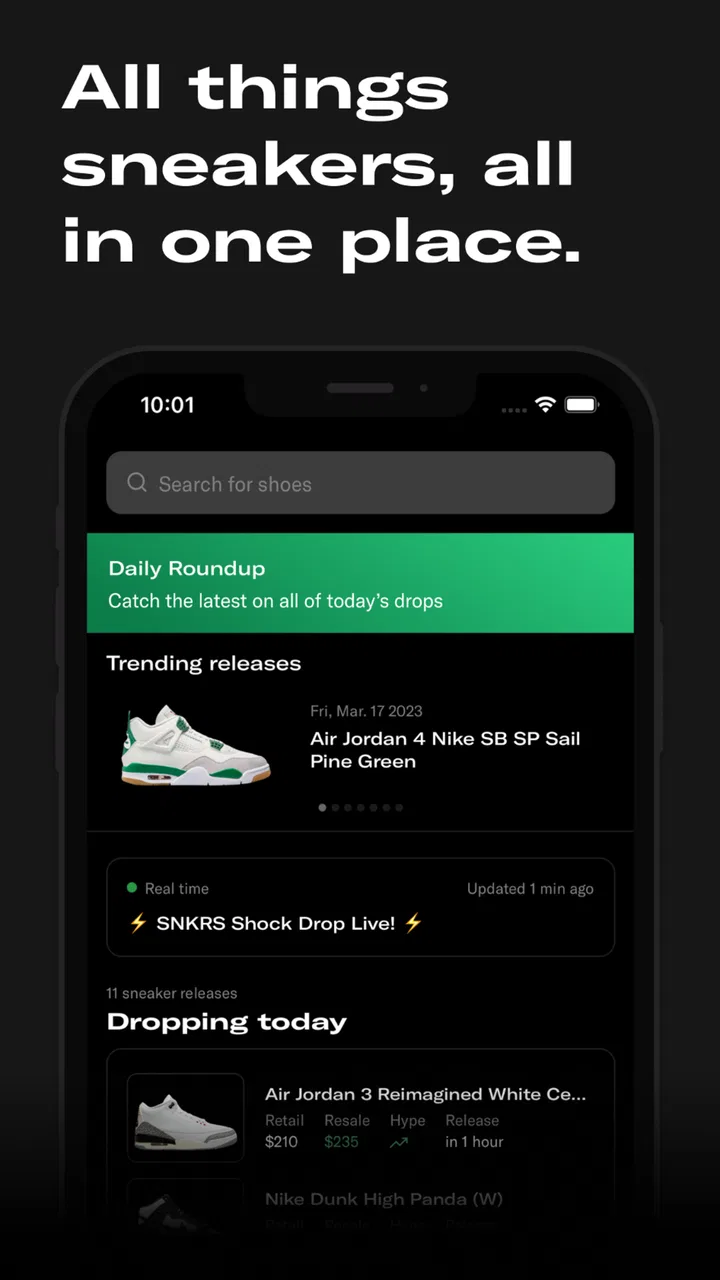
I installed Sole Retriever because keeping track of sneaker releases through scattered social posts, retailer pages, and last-minute announcements had become tiring. This free shopping app from Sole Retriever is built for people who want release information, raffle opportunities, shock-drop alerts, and sneaker news in one mobile place. My first impression was that it is less like a traditional shopping marketplace and more like a release-control center: it helps me decide what deserves attention before I start checking retailers or entering a draw.
That distinction matters. The app does not replace every store or guarantee that I will secure a pair. Its value is in organizing a fast-moving part of sneaker shopping, especially when timing and connectivity affect what I can see. When a release window changes or a surprise drop appears, having relevant information gathered together is much more practical than relying on a general shopping app and hoping its search results are current.
How Sole Retriever fits into a sneaker buyer’s routine
The app’s strongest use case is planning. I can look ahead at upcoming shoes, review release information, and decide which pairs are worth following. Instead of opening several retailer apps every morning, I can begin with one focused feed and then move to the retailer when I am ready to buy. That saves time, but it also changes my behavior: I am less likely to react blindly to every notification and more likely to create a short list of releases that actually match my budget, style, or collection.
You May Also Like

 AccuWeather: Weather Radar
AccuWeather Review: A Quick, Clear Forecast for Everyday Decisions
For everyday plans, the best forecast is the one you can understand quickly. AccuWeather makes rain timing, radar, and local conditions easy to act on, with a few trade-offs.

 Hill Climb Racing
Why Hill Climb Racing Still Turns Crashes Into One More Run
A tiny car, a bumpy hill and one more upgrade: Hill Climb Racing keeps resurfacing because its simple chaos makes every near-miss feel personal.

 AliExpress - Shopping App
AliExpress Makes Global Shopping Feel Personal, but Shoppers Bear the Risk
AliExpress turns a global marketplace into a pocket-sized discovery engine. Its reach is useful, its shopping loop compelling, and its trade-offs easy to miss.

 Lords Mobile: Kingdom Wars
Lords Mobile Is a Kingdom-Building Routine, Not a Quick Match
A case-by-case verdict on the building, battles, device demands, and social commitments that make Lords Mobile rewarding for some players and exhausting for others.

 PDF Scanner app - TapScanner
TapScanner Makes Paperwork Easier to Capture, Check, and Share
TapScanner makes scanning with a phone feel less like a rescue operation and more like a dependable step in getting work done. Its capture tools are useful, though not flawless.

 Block Blast!
 Shows How Much a Puzzle Game Can Leave Out
A quiet grid game shows why puzzle players increasingly value instant clarity, repeatable skill and low-pressure play—and where the genre still needs to catch up.
More From Our News Desk
View All News


The release-date view is particularly useful for separating immediate opportunities from future possibilities. I would use it at the start of the week to identify important launches, then return closer to release time to check whether a raffle or special drop deserves attention. This two-stage workflow is better than treating every announcement as an emergency. It also reduces the chance of missing a pair simply because its release information was buried in a busy social feed.
Raffles are another reason to keep the app installed. A raffle is not the same as a normal checkout, and the difference is easy to overlook when several releases happen together. I find the app more useful when I treat raffle information as a checklist: identify the shoe, read the entry instructions, note the closing time, and confirm any retailer-specific steps before submitting anything. That approach prevents the common mistake of assuming that seeing a raffle listed means I am already entered.
The app also makes sense for people who follow limited releases casually. You do not need to be a serious collector to benefit from a focused place for sneaker news. If I only care about a handful of brands or silhouettes, I can use the broader release information as a filter rather than spending hours browsing everything. On the other hand, someone who wants a simple store with a cart, delivery tracking, and one checkout experience may find this app less direct than a retailer’s own application.
Why the network matters during release moments
Connectivity shapes the experience more than it might seem from the shopping label. Release information, raffle instructions, news, and alerts are useful because they can change quickly. When I have a stable connection, the app works as a convenient starting point for checking what is happening now and what is approaching. The benefit is not just having information in one place; it is having a mobile view that I can consult while moving between work, home, and a store.
The most stressful moment is a shock drop. A planned release gives me time to prepare, but a surprise launch turns the app into an attention tool. I may see an alert, open the relevant information, and then move immediately to the retailer handling the sale. That sequence depends on several links in the chain: the alert must arrive, the app must load, the retailer page must respond, and my connection must remain usable while I act. Sole Retriever can improve awareness, but it cannot remove the uncertainty created by demand and timing.
I would not treat an alert as proof that stock is still available. An alert tells me that an opportunity may be active; it does not guarantee a successful purchase. By the time I open it, the retailer’s page may be crowded or the release may have changed. My practical tip is to keep payment details and account access ready in the relevant retailer apps before an important launch. That preparation is more valuable than repeatedly refreshing Sole Retriever itself.
There is also a difference between reading news and acting on a release. News can wait a few minutes, while a limited drop may not. When I am on a weak mobile connection, I use the app for broad planning and avoid depending on it as my only real-time signal. If a release matters, I check the retailer’s own channel as soon as possible. This is one of the clearest trade-offs: the app centralizes discovery, while the final transaction usually belongs elsewhere.
Using it on commutes, breaks, and busy days
Sole Retriever feels designed for short mobile sessions. I can check a release list during a coffee break, scan a notification while commuting, or review sneaker news before deciding whether to investigate further. That is more convenient than sitting at a desktop with multiple tabs open. The focused subject matter also makes quick browsing easier because I am not sorting through unrelated products.
However, a moving environment is not always ideal for time-sensitive buying. On a train or in a crowded public place, a notification may arrive when I cannot immediately complete the next step. If I open the app, read the details, and then wait several minutes before reaching the retailer, the opportunity may have changed. I therefore use mobile access in two different ways: for discovery when I am away from home, and for action only when I can give the release my full attention.
A realistic example is a workday lunch break. I might receive a notification about a shoe I have been watching, open the app to confirm the release context, and decide whether it is a raffle or a direct sale. If it is a raffle with a reasonable entry window, I can complete it without rushing. If it is a shock drop, I would postpone nonessential browsing, switch to a reliable connection if available, and open the retailer immediately. The app helps me make that decision quickly, but the decision itself still requires judgment.
For parents, students, and workers, this distinction can prevent wasted effort. Not every alert deserves an instant response. I find it helpful to ask three questions before acting: do I genuinely want the shoe, is the release method clear, and can I complete the retailer’s process right now? If the answer to the last question is no, saving the information mentally or returning later may be wiser than repeatedly attempting a purchase over an unstable connection.
What happens when a page, alert, or release goes wrong
Any app centered on fast-changing information has moments where the experience feels fragile. A page may take longer to load, a notification may bring me to information that has already changed, or a retailer’s checkout may fail after I leave the app. I do not see these as reasons to dismiss Sole Retriever, but they are important limitations for anyone expecting a guaranteed path from alert to purchase.
My recovery routine is simple. First, I check whether the problem is limited to the app or affects other services on the same connection. Then I reopen the release information rather than relying only on the notification preview. If the opportunity involves a retailer, I move to that retailer’s official page and confirm the current status there. This prevents an old alert from becoming my only source of truth.
It is also worth distinguishing a loading failure from a sold-out release. A slow page does not automatically mean the shoe is gone, and a visible release does not mean stock remains. I avoid making several rapid attempts without checking the retailer’s instructions, because repeated actions can create confusion around sign-ins, carts, or raffle entries. The app is most useful when it supports a calm verification process instead of encouraging panic.
Another practical limitation is that a single release may involve different rules depending on the retailer. Entry requirements, launch times, and checkout flows are not necessarily identical. I read the details carefully and treat the app as the organizer of the opportunity, not as the final authority for every retailer-specific step. That habit is especially important for new users who may assume that every listed event works like a standard online purchase.
When notifications become distracting, I would rather reduce unnecessary attention than uninstall the app immediately. I focus on releases that fit my interests and use the app as a deliberate check-in tool. The experience improves when I decide what I am watching instead of allowing every update to dictate my day. For a sneaker enthusiast, that can be the difference between useful awareness and notification fatigue.
Keeping mobile data use sensible
Because the app is built around current releases, news, and alerts, I use it more carefully on mobile data than I would use a static catalog. I avoid opening every story or refreshing a release page repeatedly when I am away from Wi-Fi. A quick scan is usually enough to decide whether something deserves deeper attention later. This is not about avoiding the app; it is about matching the amount of browsing to the importance of the release.
My most efficient workflow is to check the release calendar briefly, open only the shoes I am genuinely considering, and leave retailer browsing for the moment when I am ready to act. That reduces redundant loading and keeps my attention focused. It also helps with battery habits, since constant checking during a long day is rarely productive unless I am actively waiting for a particular launch.
I would not assume that previously viewed information will always be available without a connection. For that reason, I make a note of important release details before entering an area with unreliable service, or I confirm them through the retailer when the opportunity is important. The app’s usefulness depends on current information, so I prefer to verify rather than rely on memory from an earlier session.
Data-conscious use is also about avoiding unnecessary app switching. I use Sole Retriever to discover and organize opportunities, then open the relevant retailer only when the release is worth pursuing. Jumping between multiple retailer apps before I know what I want creates more clutter and makes it harder to remember which raffle or launch I was actually following. The app works best as a filter at the beginning of the process.
Who should install it and who should look elsewhere
I would recommend Sole Retriever to anyone who regularly misses sneaker releases because information is spread across too many places. It is also a good fit for buyers who want to compare upcoming opportunities before deciding where to spend time. Collectors may appreciate the combination of release tracking, raffle awareness, shock-drop news, and broader sneaker updates, while casual buyers can use it selectively for a few shoes each season.
The app is less suitable for someone who wants an all-in-one shopping destination. If your priority is browsing available inventory, adding products to a cart, choosing shipping, and managing an order in the same place, a retailer’s app will be more direct. Sole Retriever is a discovery and timing companion, not the complete retail journey. That difference should be clear before installing it.
It may also be a poor match if you dislike alerts or have no interest in limited releases. The app’s appeal comes from staying informed about events that can change quickly. If you prefer ordinary shopping with stable stock and no pressure around release windows, a general marketplace may feel calmer. I would not install this expecting it to make scarce sneakers easy to buy; it mainly helps me avoid being uninformed.
The app is free to install, which makes trying its workflow straightforward. It is available for Everyone and runs on Android devices using at least version 7.0. There are in-app purchases ranging from $6.99 to $149.99 per item, so I would review any paid option carefully and decide whether it adds enough value to my own routine. The basic appeal is easy to test without turning the first session into a commitment.
My experience with the current app version
The current version is 4.7.0, and the product has been available since April 1, 2021. That gives it a more established feel than a brand-new release tracker, while its audience is still fairly focused: the app has passed 100K installs and holds a 4.4 average from around 1.6K ratings. I read those figures as signs of a useful niche rather than proof that every sneaker shopper will love it.
What I value most is the way the app changes my preparation. Before using it, I might discover a release too late through a general social feed. With it, I can begin earlier, identify whether the opportunity is a raffle or another kind of drop, and decide which retailer deserves my attention. That is a modest improvement, but in sneaker shopping, better preparation often matters more than another place to browse.
The main friction remains outside the app: retailer congestion, changing availability, and the need for a dependable connection at the exact moment of purchase. Sole Retriever can surface an opportunity, but it cannot control the retailer’s checkout or guarantee that an alert arrives before other shoppers act. I appreciate the app more when I judge it by its real role—organizing awareness—rather than expecting it to solve scarcity.
After using it, I would keep it installed if sneaker releases are part of my regular shopping habits. I would check it briefly rather than leave it running as a constant stream of urgency, and I would always verify critical details at the retailer before entering payment information or a raffle. That balance gives me the useful part of the service without letting notifications or unstable mobile conditions control my day.
My final view is that Sole Retriever is best as a connected release companion, not a complete sneaker store. It brings sneaker drops, raffles, release planning, shock-drop awareness, and news into a focused mobile experience, then lets me choose what deserves action. If you want a calmer catalog with guaranteed checkout, choose a retailer app instead. If you want a practical way to spot opportunities early and organize your next move, this free shopping app earns a place on your phone.
FAQs for Sole Retriever - Sneakers
01What is Sole Retriever – Sneakers, and what can I use it for?
Sole Retriever – Sneakers is an app designed for sneaker enthusiasts who want to discover upcoming releases, monitor launch calendars, and find information about popular footwear drops. It can help you follow release dates, learn about raffles and retailers, and keep track of sought-after models from brands such as Nike, Jordan, adidas, and other major labels. It is especially useful for users who do not want to miss limited releases or restocks.
02Does Sole Retriever sell sneakers directly through the app?
Sole Retriever is primarily an information and release-tracking platform rather than a traditional sneaker store. The app may provide links, release details, raffle information, or retailer options, but purchases are generally completed through the relevant retailer or brand website. Before buying, check the destination carefully, review the seller’s policies, and confirm shipping costs, return conditions, and regional availability, since these details can vary between retailers.
03Can I receive notifications for upcoming sneaker releases and restocks?
Yes, notifications are one of the most useful features for sneaker shoppers using Sole Retriever. Depending on the release and your selected preferences, the app may alert you about launch dates, raffles, restocks, or important updates. To make notifications effective, allow them in your device settings and review the app’s notification controls. Release information can change, so checking the listing again before launch is still recommended.
04Is Sole Retriever – Sneakers free to download and use?
The app may be available to download at no initial cost, although some features, content, or promotional tools can depend on the current version and platform. App pricing and optional purchases may change over time, so it is best to review the Google Play Store or Apple App Store listing before installing. Also remember that using retailer links can lead to separate purchases, shipping charges, or other fees.
05Is Sole Retriever available worldwide, and are all sneaker releases accessible in my country?
Sole Retriever can be useful for sneaker fans in many regions, but release availability is not necessarily worldwide. Some raffles, stores, launch dates, and purchasing links are limited to specific countries, currencies, or shipping zones. The app may show a release that is not available locally, so always verify the retailer’s location requirements and delivery coverage. Availability can also differ between Android and iOS versions or change after publication.
Pros
- Tracks sneaker releases
- restocks
- and raffles in one place.
- Useful alerts help users react quickly to limited drops.
- Covers popular brands and highly sought-after sneaker models.
- Release details can make raffles easier to discover and follow.
- Helpful for comparing upcoming drops across different brands.
Cons
- Limited releases can sell out before alerts are seen.
- Frequent notifications may feel excessive for casual shoppers.
- Some raffle or retailer details may change without warning.
- Availability and features may vary depending on your location.
- The app is less useful if you rarely buy collectible sneakers.

Sole Retriever - Sneakers
Gallery